Critical Theory and Animal Liberation by John Sanbonmatsu
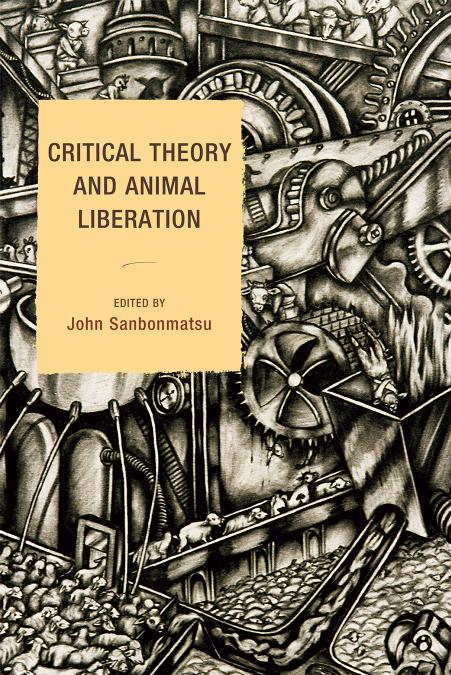
Author:John Sanbonmatsu [Sanbonmatsu, John]
Language: eng
Format: epub, pdf
ISBN: 978-1-4422-0582-6
Publisher: Rowman & Littlefield Publishers
Published: 0101-01-01T00:00:00+00:00
9
* * *
Animal Repression
Speciesism as Pathology
By Zipporah Weisberg
Be. And, at the same time, know what it is not to be.
That emptiness inside you allows you to vibrate
in resonance with your world. Use it for once.
To all that has run its course, and to the vast unsayable
numbers of beings abounding in Nature
add yourself gladly, and cancel the cost.
âRainer Maria Rilke1
Peter Singer defines speciesism as âa prejudice or attitude of bias in favor of the interests of members of ones own species and against those of members of other species.â2 This is certainly the fundamental structure of speciesism: the human species positions itself as superior to other species, and gives itself license to inflict egregious cruelties against them, simply by virtue of the fact that they are not human. Furthermore, it is well known that the justification for speciesism and the exclusion of other animals from ethical consideration remains the assertion of an insurmountable binary opposition between puta-tively rational humans and irrational animals. This dichotomy, which can be traced back to classical antiquity, began to have especial import in the early modern period with the arrival of Renaissance humanism; it has for the most part been consistently and uncritically reaffirmed in Western religious, philosophical, and scientific thought ever since. The rational human/irrational animal distinction has undoubtedly provided the justification for the instru-mentalization and systemic torture and murder of other animals over the centuries. However, what is not wholly accounted for in the analysis of this binary opposition, or in the debates around the origins of speciesism as a whole, is the psychological dimension of animal hatred. Part and parcel of the system of apartheid which pits humans against other animals is humansâ repression of their own animality. By âanimalityâ I mean principally the embodied consciousness we have in common with other sentient beings and the in-tersubjective relationality this shared embodiment engenders.3 Our fanatic denial of our own animality and our concomitant systemic brutalization of other animals throughout the millennia have had profoundly detrimental effects not only on our animal kin but also on our own psychic health. In short, a massive self-deception has been at play in the course of the development of Western civilization, which has proved not only immensely damaging to the welfare of other animals, but has also proven injurious to humansâ psychological well being. Animal repression can result in or is even constitutive of an unconscious sense of loss, melancholia, ambivalence, guilt, and a host of other neuroses, on both an individual and a societal level. To properly understand and ultimately overcome speciesism, then, it is paramount that we examine the psychological mechanism of repression which results in undue torment for both the oppressed and the oppressors.
Download
Critical Theory and Animal Liberation by John Sanbonmatsu.pdf
This site does not store any files on its server. We only index and link to content provided by other sites. Please contact the content providers to delete copyright contents if any and email us, we'll remove relevant links or contents immediately.
| Anthropology | Archaeology |
| Philosophy | Politics & Government |
| Social Sciences | Sociology |
| Women's Studies |
The remains of the day by Kazuo Ishiguro(9082)
Tools of Titans by Timothy Ferriss(8490)
Giovanni's Room by James Baldwin(7432)
The Black Swan by Nassim Nicholas Taleb(7195)
Inner Engineering: A Yogi's Guide to Joy by Sadhguru(6835)
The Way of Zen by Alan W. Watts(6670)
The Power of Now: A Guide to Spiritual Enlightenment by Eckhart Tolle(5854)
Asking the Right Questions: A Guide to Critical Thinking by M. Neil Browne & Stuart M. Keeley(5831)
The Six Wives Of Henry VIII (WOMEN IN HISTORY) by Fraser Antonia(5557)
Astrophysics for People in a Hurry by Neil DeGrasse Tyson(5224)
Housekeeping by Marilynne Robinson(4503)
Double Down (Diary of a Wimpy Kid Book 11) by Jeff Kinney(4332)
12 Rules for Life by Jordan B. Peterson(4331)
Ikigai by Héctor García & Francesc Miralles(4310)
The Ethical Slut by Janet W. Hardy(4307)
Skin in the Game by Nassim Nicholas Taleb(4306)
The Art of Happiness by The Dalai Lama(4167)
Skin in the Game: Hidden Asymmetries in Daily Life by Nassim Nicholas Taleb(4051)
Walking by Henry David Thoreau(3999)
